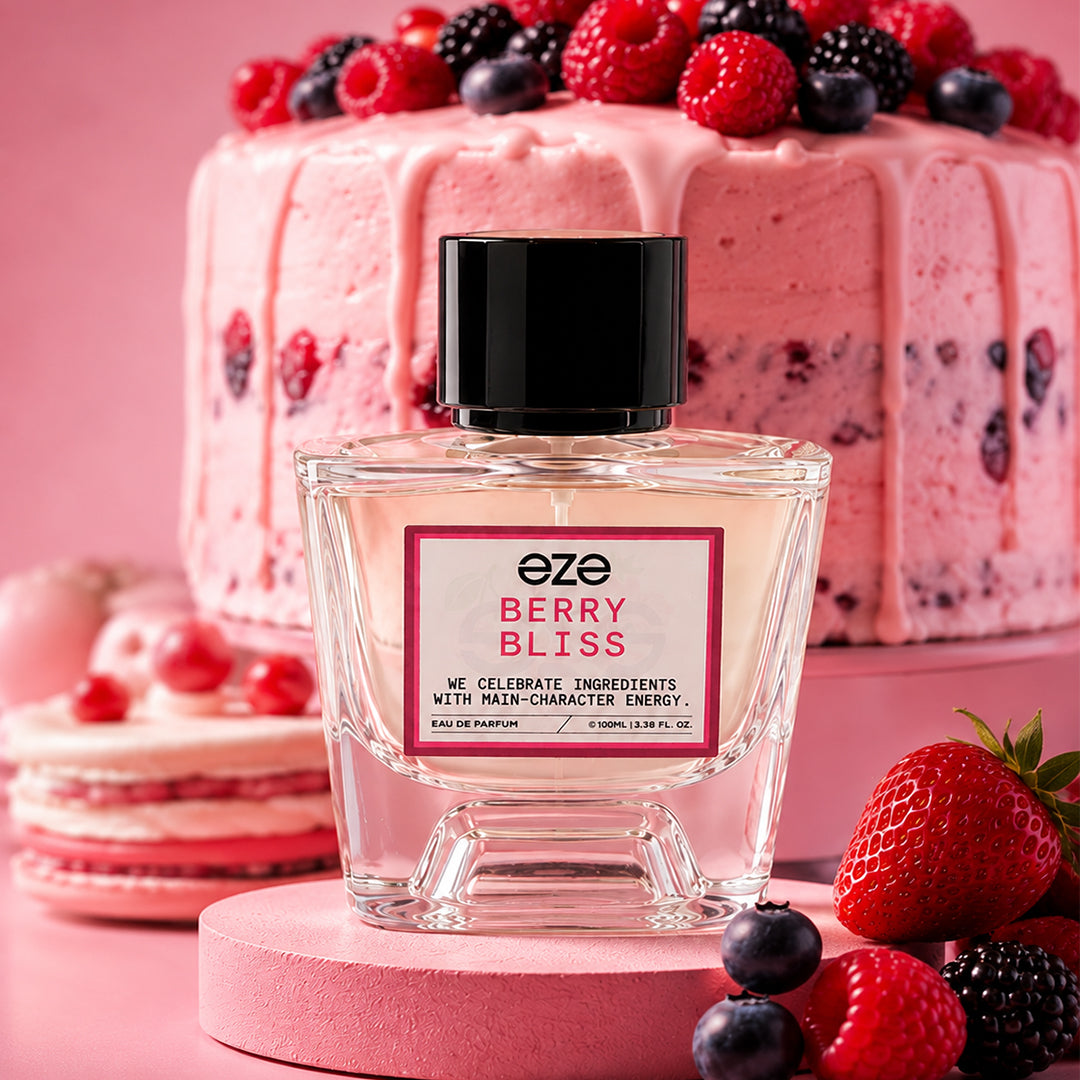


Perfume vs Deodorant: The Key Differences You Need to Know
Deodorant controls body odour by tackling the bacteria that cause it. Perfume adds a deliberate, lasting scent and does nothing about sweat. Deodorant goes on your underarms and lasts a few hours. Perfume goes on your pulse points and an Eau de Parfum will hold 8 to 10. They are not alternatives, and the best routine uses both — deodorant first, then perfume.
Quick takeaways
Deodorant is hygiene. Perfume is scent. Different jobs, different chemistry.
Perfume is far more concentrated, so it lasts several times longer.
Deodorant on underarms. Perfume on pulse points — wrists, neck, behind the ears. Never swap them.
Perfume is not a substitute for deodorant. It masks odour briefly and then mixes with it.
The right routine is both, deodorant first on clean dry skin, then perfume.
The short comparison
| Deodorant | Perfume (Eau de Parfum) | |
|---|---|---|
| What it does | Controls body odour | Creates a lasting scent |
| How it works | Antibacterial agents neutralise odour-causing bacteria on skin | Fragrance oils evaporate in stages, top to base |
| Fragrance concentration | Low, a light scent at most | High, the highest of the everyday formats |
| Typical longevity | A few hours, reapply as needed | 8–10 hours for an Eze EDP |
| Where to apply | Underarms, and other areas that sweat | Pulse points — wrists, neck, behind the ears |
| Formats | Spray, roll-on, stick, gel | Spray |
| Stops sweat? | Some do, if they are also an antiperspirant | No |
| Best for | Daily wear, workouts, hot days | Work, evenings, occasions, personal signature |
| Price in India | Entry level | Mid to premium |
What is deodorant?
Deodorant is a hygiene product that addresses body odour. Sweat itself is close to odourless. The smell comes from bacteria on your skin breaking it down, and deodorant reduces or masks the result so you stay fresh through the day.
It is usually applied to the underarms, though it can go anywhere prone to sweating, and it comes as a spray, roll-on, stick or gel. Some deodorants are also antiperspirants, which reduce how much you sweat rather than only managing the smell. Apply after a shower, on clean and dry skin, and reapply when you need to.
What is perfume?
Perfume is a blend of fragrant oils, aromatic compounds, fixatives and solvents built to create a pleasant, lasting scent. It is not a hygiene product. It exists for scent aesthetics and personal expression, for the impression that lingers after you have left the room.
A perfume is structured in three layers. Top notes are what you smell in the first minutes, bright and volatile. Heart notes carry the character. Base notes are the heavy molecules — musk, amber, woods — that hold everything down and decide how long it lasts. That is why a perfume smells different at hour six than at minute one, and a deodorant smells the same throughout.
Concentration is the real difference
The word perfume covers several concentrations, and this is where most of the confusion about longevity comes from.
| Format | Fragrance oil | Typical wear |
|---|---|---|
| Eau de Parfum (EDP) | Highest of the common formats | 8–10 hours |
| Eau de Toilette (EDT) | Lower than EDP | 3–5 hours |
| Eau de Cologne | Lower still | 2–3 hours |
| Body mist | Very light | 1–2 hours |
| Deodorant | Minimal, if any | Fragrance fades within hours |
Every Eze fragrance is an Eau de Parfum, which is why we quote 8 to 10 hours rather than hedging. If a fragrance has let you down on longevity, the concentration is usually the reason.
Can you use perfume instead of deodorant?
No, and this is the single most common mistake. Perfume has no antibacterial action, so it does nothing about the bacteria producing the odour. What you get is a pleasant smell sitting on top of an unpleasant one, and within a couple of hours the two have mixed into something worse than either.
There is a second reason not to. Spraying perfume directly into your underarms puts alcohol on skin that is often freshly shaved and already irritated, which stings and can leave marks on clothing. Underarms are for deodorant. Pulse points are for perfume.
Is perfume a deodorant?
No. A perfume may contain alcohol, which has some transient antibacterial effect, but it is not formulated to control odour and does not behave like a deodorant over a day. Think of it the other way round as well: a deodorant is not a perfume. Its fragrance is deliberately light, because it is designed to be neutral rather than memorable.
Deodorant vs Eau de Toilette: which should you buy?
These get compared because they sit at similar prices, but they are answering different questions. If the problem is sweat and odour through a working day, buy the deodorant. If you want to smell like something in particular, buy the fragrance, and buy an Eau de Parfum rather than an Eau de Toilette so it lasts past lunch.
If the honest answer is both, that is normal, and layering them is covered below.
Which lasts longer, perfume or deodorant?
Perfume, by a wide margin. Fragrance oil concentration is the reason. A deodorant’s scent is a light finish on a functional product and fades within a few hours. An Eau de Parfum like Eze is built to develop over 8 to 10 hours, because the base notes are chosen to evaporate slowly.
Two practical notes for Indian conditions. Heat speeds up evaporation, so everything lasts a little less in May than in December. And fragrance holds better on moisturised skin than on dry skin, which is the cheapest longevity trick there is.
How to wear both, in order
- Shower and dry properly. Deodorant applied to damp skin does not work as well and is more likely to mark clothing.
- Deodorant on clean, dry underarms. Give it a minute to settle.
- Moisturise the areas where the perfume goes. Wrists, neck, behind the ears. Fragrance clings to hydrated skin.
- Perfume on pulse points, from a few inches away. Two or three sprays of an EDP is plenty.
- Do not rub your wrists together. The friction and heat break the top notes before they have opened.
Layering the same scent family in both products is neater than combining two unrelated ones. Eze makes deodorants in matching signatures — ID as a unisex deodorant, Nomad for him, Lit and Flow for her — so the two work together rather than argue.
Eze heritage
Eze is built on Sawai Fragrances, a family perfume house established in 1965, now in its third generation. Our formulations are made in house, from raw materials that must meet global certifications before they enter the palette, and an Eze composition runs from 30 to 150 raw materials. That is the reason the longevity figures above are specific rather than aspirational.
So which do you actually need?
- Daily, in heat, active - deodorant is not optional. Start there.
- Office, meetings, presence - an Eau de Parfum. Something fresh and versatile like ID or Vibe.
- Evenings, dates, celebrations - a richer EDP. Boujee or Magic.
- Gym - deodorant, and if you want a fragrance, a light citrus EDP rather than anything heavy.
- Both, most days - which is the honest answer for most people in India, so buy them as a pair and layer the same signature.
Frequently asked questions
What is the main difference between perfume and deodorant?
Purpose. Deodorant controls body odour caused by bacteria breaking down sweat. Perfume adds a deliberate, lasting fragrance and has no effect on sweat or odour.
Can I use perfume instead of deodorant?
No. Perfume has no antibacterial action, so it masks odour briefly and then mixes with it. Spraying it into underarms also irritates freshly shaved skin and can mark clothing.
Is perfume a deodorant?
No. Perfume is not formulated to control odour. Its alcohol has a brief antibacterial effect, but it will not manage odour across a day the way a deodorant does.
Which lasts longer, perfume or deodorant?
Perfume. An Eau de Parfum holds 8 to 10 hours because of its high fragrance oil concentration. A deodorant’s scent fades within a few hours.
Should I apply deodorant or perfume first?
Deodorant first, on clean dry underarms, then perfume on pulse points. Applying perfume first means the deodorant spray disturbs it.
Can I use deodorant and perfume together?
Yes, and you should. They do different jobs. Layering the same scent family in both is neater than mixing two unrelated fragrances.
What is the difference between deodorant and antiperspirant?
A deodorant tackles the odour. An antiperspirant reduces how much you sweat in the first place. Many products do both, and the label will say so.
Is deodorant or Eau de Toilette better?
They answer different questions. Deodorant for sweat and odour. A fragrance for scent, and an Eau de Parfum rather than an Eau de Toilette if you want it to last through the day.
Where should I apply perfume?
Pulse points, where skin is warm and blood vessels sit close to the surface: wrists, the sides of the neck, behind the ears, the inner elbow. Not underarms.
Does perfume stop body odour?
No. It covers it for a short time and then combines with it. Only a deodorant or antiperspirant addresses the cause.
Tags:
Previous
Luxury Perfume Gift Sets for Festivals: Elevate Your Celebration
Next
Secret Santa Gifts with a Twist: Why Perfumes Are The Perfect Pick